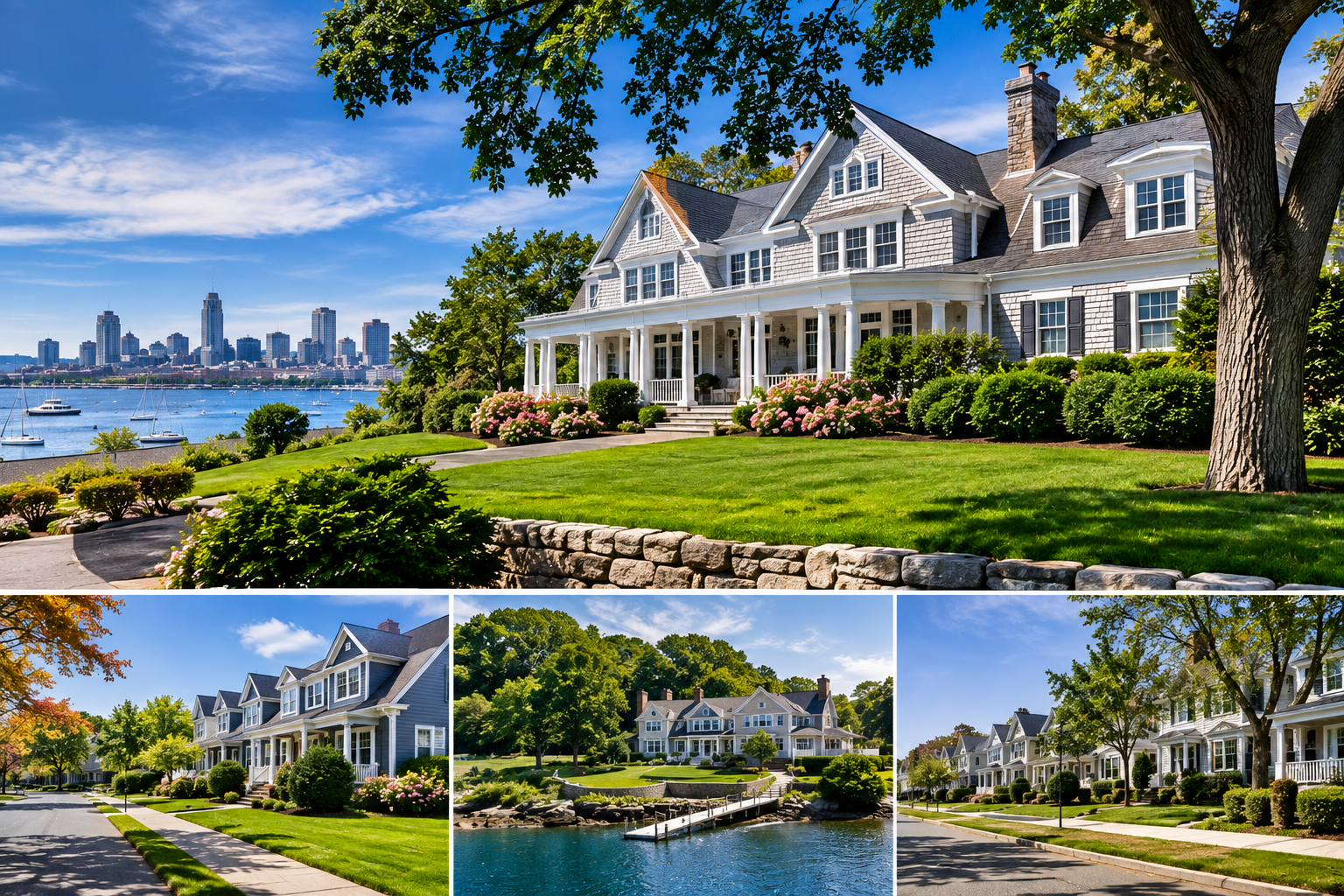
Massachusetts has one of the most diverse luxury real estate markets in New England. The state combines historic architecture, coastal scenery, established suburban communities, prestigious educational institutions, and convenient access to major employment centers.
For affluent buyers, luxury landed properties can offer something that condominiums and smaller urban residences may not: greater privacy, larger outdoor spaces, customized architecture, and a more exclusive residential setting.
In the United States, the term “landed property” is less commonly used than terms such as luxury estate, estate home, or single-family luxury property. These properties generally refer to high-end homes situated on privately owned land, often with substantial outdoor areas and premium residential features.
Massachusetts offers luxury properties in several different settings. Buyers can explore private estates in Boston suburbs, historic homes in established communities, and waterfront residences along Cape Cod, Nantucket, Martha’s Vineyard, and other coastal areas.
This guide highlights 15 Massachusetts locations worth considering when researching luxury landed properties and estate homes. It is not an official ranking, and availability, prices, and property features can change over time.
Why Are Luxury Properties Popular in Massachusetts?
Massachusetts attracts high-end homebuyers for several reasons.
The Greater Boston region is an important center for technology, healthcare, education, biotechnology, finance, and research. This creates demand for premium housing among executives, entrepreneurs, professionals, and other high-income households.
The state also offers a wide variety of lifestyles. Buyers can choose a private suburban estate near Boston, a historic residence in a traditional New England town, or a coastal home designed around waterfront living.
Limited inventory in certain desirable communities can also make luxury properties highly competitive. However, buyers should evaluate each property individually rather than assuming that every luxury home will automatically appreciate in value.
15 Luxury Estate Areas to Consider in Massachusetts
1. Weston
Weston is one of the most established luxury residential communities in the Greater Boston area.
The town is known for spacious residential properties, wooded surroundings, and a suburban atmosphere. Luxury estate homes in Weston can offer larger lots, custom architecture, landscaped grounds, and substantial living spaces.
Its proximity to Boston also makes the community attractive to professionals who want privacy without moving too far from the metropolitan area.
Buyers should compare individual properties carefully because lot size, architecture, renovation quality, and location can vary considerably.
2. Brookline
Brookline provides a distinctive combination of historic architecture, urban convenience, and upscale residential neighborhoods.
Luxury properties in Brookline may include historic homes, architecturally significant residences, renovated properties, and larger single-family houses.
The community’s proximity to Boston, universities, hospitals, restaurants, and public transportation makes it particularly attractive to buyers who want an upscale residential environment without giving up city access.
Because land availability is more limited than in some suburban communities, luxury properties in Brookline can be defined as much by location and architecture as by lot size.
3. Wellesley
Wellesley is a well-known suburban community west of Boston and is frequently considered by buyers searching for high-end residential properties.
The town features established neighborhoods, mature trees, traditional New England architecture, and larger single-family homes.
Luxury properties may include custom-built houses, renovated historic residences, and homes with extensive landscaping and outdoor living areas.
Wellesley’s schools, community amenities, and access to Boston-area employment centers also contribute to its residential appeal.
4. Newton
Newton is a large suburban city made up of several distinct villages, each offering a different residential character.
The city’s luxury housing market includes historic properties, newly constructed homes, renovated residences, and larger estate-style houses.
Some properties feature spacious gardens, outdoor entertainment areas, home offices, advanced technology, and customized interiors.
Newton can be especially attractive to buyers who want a larger home while remaining relatively close to Boston, Cambridge, and other major employment centers.
5. Cambridge
Cambridge is globally recognized for its universities, research institutions, technology companies, and cultural attractions.
Although the city’s residential properties are often located on smaller lots than luxury estates farther from Boston, high-end homes can command significant value because of their location, architecture, and proximity to major institutions.
Luxury residences in Cambridge may include historic houses, architect-designed properties, and extensively renovated homes.
For buyers who prioritize walkability, cultural amenities, and access to Boston-area employment centers, Cambridge can offer a distinctive luxury lifestyle.
6. Lexington
Lexington combines historical significance with an established suburban residential market.
Luxury homes in the area can include large single-family properties, custom-built residences, traditional Colonial-style houses, and homes with substantial landscaped grounds.
The community’s location near major employment corridors makes it attractive to professionals, while its residential character can appeal to families looking for more space and privacy.
Buyers should evaluate individual school districts, property taxes, commuting requirements, and neighborhood characteristics before purchasing.
7. Concord
Concord offers a quieter setting characterized by historic properties, wooded landscapes, open spaces, and traditional New England architecture.
Luxury estate properties in the area may provide larger lots, extensive gardens, private outdoor spaces, and customized residences.
The community is particularly appealing to buyers who value privacy and a less urban lifestyle while remaining within reach of the Boston metropolitan area.
Properties near conservation land or other protected areas may offer especially distinctive surroundings, although buyers should understand the applicable land-use and development restrictions.
8. Cape Cod
Cape Cod is one of Massachusetts’ best-known destinations for coastal residential living.
Luxury homes across the Cape can range from traditional New England-style residences to contemporary waterfront properties. Depending on location, high-end homes may offer ocean views, private outdoor spaces, pools, docks, or direct access to coastal amenities.
Cape Cod is also popular with seasonal residents and vacation-home buyers.
However, coastal buyers should carefully review flood exposure, insurance requirements, storm risks, erosion concerns, and year-round accessibility before purchasing.
9. Nantucket
Nantucket is synonymous with high-end coastal real estate and distinctive New England architecture.
The island is known for its historic character, beaches, harbor views, and limited land availability. Luxury properties may include traditional shingle-style homes, contemporary residences, historic houses, and larger private compounds.
Location is particularly important on Nantucket. Properties closer to beaches, town centers, or waterfront areas can have very different characteristics and pricing.
Potential buyers should also consider transportation, seasonal demand, insurance, property maintenance, and local development restrictions.
10. Martha’s Vineyard
Martha’s Vineyard offers another well-known luxury real estate market in Massachusetts.
The island includes several communities, each with its own character and housing market. Luxury properties range from traditional coastal homes to modern residences and larger private estates.
Many buyers are attracted by the island’s beaches, natural landscapes, restaurants, boating opportunities, and relaxed coastal lifestyle.
As with other island markets, buyers should account for transportation logistics, seasonal occupancy, insurance, maintenance, and local regulations.
11. Winchester
Winchester is a residential community north of Boston with a strong suburban character.
Luxury homes in Winchester can include historic residences, renovated properties, custom-built houses, and larger homes with landscaped grounds.
Its location provides access to Boston while offering a quieter residential environment.
For buyers interested in luxury properties close to the city, Winchester may be worth comparing with other northern Boston suburbs.
12. Andover
Andover offers a combination of historic character, suburban neighborhoods, green spaces, and larger residential properties.
Luxury homes may include custom-built residences, traditional New England houses, and properties with larger lots and landscaped outdoor areas.
The town can appeal to buyers seeking more privacy and space while maintaining access to employment centers in the Greater Boston region.
Before purchasing, buyers should consider commuting distance, property taxes, maintenance requirements, and the overall cost of ownership.
13. Hingham
Hingham is a coastal community south of Boston known for its historic character and suburban environment.
Luxury properties in the area can include large single-family homes, waterfront residences, and architecturally distinctive properties.
Its proximity to the Boston metropolitan area combined with coastal amenities makes Hingham an attractive option for buyers who want both convenience and a quieter lifestyle.
Waterfront buyers should pay particular attention to flood insurance, shoreline conditions, and long-term property maintenance.
14. Lincoln
Lincoln is known for its open spaces, wooded landscapes, and low-density residential environment.
The community can be particularly appealing to buyers searching for privacy and larger properties within the Greater Boston region.
Luxury residences in Lincoln may include custom homes, historic properties, and estate-style houses surrounded by natural landscapes.
Buyers should investigate conservation restrictions and local zoning rules when considering properties with substantial acreage.
15. Dover
Dover is a low-density suburban community located southwest of Boston.
The town is known for larger residential properties, wooded surroundings, and a rural atmosphere. Luxury estate homes in Dover can provide substantial privacy and outdoor space compared with properties in more densely developed communities.
Some properties may be suitable for buyers interested in equestrian or agricultural lifestyles, although permitted uses depend on local zoning and individual property conditions.
Dover can be an appealing choice for buyers who want a private estate while remaining within commuting distance of Boston.
What Makes a Luxury Landed Property Different?
Luxury real estate is not defined by price alone. A truly high-end property can stand out because of its location, architecture, construction quality, privacy, land, views, amenities, or historical significance.
Common characteristics may include:
- Large private lots
- Custom architectural design
- High-quality construction materials
- Gourmet kitchens
- Spacious primary suites
- Home offices
- Smart-home technology
- Swimming pools
- Landscaped gardens
- Outdoor entertainment areas
- Guest accommodations
- Garages or additional parking
- Waterfront or scenic views
Not every property will have all of these features. Buyers should evaluate the actual specifications and condition of each home.
Factors to Consider Before Buying a Luxury Estate in Massachusetts
Purchasing a luxury home requires more than evaluating the appearance of the property.
Location
Location remains one of the most important factors in real estate. Consider proximity to Boston, transportation, schools, healthcare, shopping, restaurants, airports, and recreational facilities.
Land and Lot Characteristics
For estate properties, the land itself can be as important as the house.
Review lot boundaries, access roads, drainage, landscaping requirements, conservation restrictions, and potential development limitations.
Property Taxes
Luxury properties can carry significant property tax obligations. Buyers should verify the current tax assessment and understand that taxes may change over time.
Insurance
Insurance costs can be substantial for high-value homes. Waterfront properties may also require additional coverage related to flooding or other coastal risks.
Maintenance
Large homes and extensive grounds can require considerable ongoing maintenance.
Budget for landscaping, heating and cooling, roofing, exterior maintenance, pools, driveways, security systems, and other property-related expenses.
Privacy and Security
Buyers who prioritize privacy should examine neighboring properties, road access, landscaping, security systems, and the overall layout of the property.
Resale Considerations
Luxury properties can appeal to a smaller pool of buyers than conventional homes.
Factors such as location, architectural design, property condition, taxes, and market demand can influence how easily a luxury home can be resold.
Are Luxury Homes in Massachusetts a Good Investment?
Luxury real estate can be an attractive long-term asset, but no property investment comes with a guaranteed return.
Potential performance depends on factors such as:
- Purchase price
- Location
- Local housing demand
- Property condition
- Land value
- Financing costs
- Property taxes
- Insurance
- Maintenance expenses
- Market conditions
- Future buyer demand
Buyers considering an estate as an investment should evaluate the complete cost of ownership and consider professional financial and real estate advice when appropriate.
A luxury home purchased primarily as a residence should also be evaluated according to lifestyle value rather than expected appreciation alone.
Waterfront Luxury Properties: Important Considerations
Massachusetts has an extensive coastline, making waterfront properties particularly attractive to luxury buyers.
However, waterfront ownership can involve additional responsibilities.
Before purchasing a coastal property, investigate:
- Flood-zone designation
- Flood insurance requirements
- Storm exposure
- Erosion risk
- Shoreline regulations
- Insurance availability
- Property access
- Septic or wastewater systems
- Long-term maintenance costs
A beautiful ocean view can be a major lifestyle benefit, but buyers should understand the financial and environmental considerations associated with coastal ownership.
Frequently Asked Questions
What is a luxury landed property?
In the U.S., a luxury landed property is generally described as a high-end single-family home situated on privately owned land. It may include a large lot, custom architecture, premium finishes, landscaped grounds, and additional amenities.
Which Massachusetts areas are popular for luxury homes?
Weston, Wellesley, Newton, Brookline, Lexington, Concord, Lincoln, Dover, and other established Boston-area communities are often considered by luxury buyers. Cape Cod, Nantucket, Martha’s Vineyard, and other coastal areas are also popular for high-end residential properties.
Are waterfront luxury homes available in Massachusetts?
Yes. Massachusetts has luxury waterfront and coastal properties in areas including Cape Cod, Nantucket, Martha’s Vineyard, Hingham, and other shoreline communities. Exact availability and property features vary over time.
What features are common in luxury estate homes?
Luxury properties may include custom kitchens, large bedrooms, home offices, pools, landscaped grounds, smart-home systems, entertainment rooms, garages, guest accommodations, and outdoor living areas.
Are luxury homes in Massachusetts good investments?
They can be, but appreciation is not guaranteed. Buyers should consider location, purchase price, ongoing expenses, local demand, market conditions, and resale potential before making an investment decision.
Are luxury landed properties suitable for families?
Many are. Large homes and private outdoor spaces can provide additional room for families. Communities such as Wellesley, Weston, Lexington, Newton, and Dover may appeal to buyers seeking suburban environments.
How much land do luxury estate homes typically have?
There is no standard size. Some luxury homes may occupy less than an acre, while larger estates can cover several acres or more. Lot sizes vary considerably depending on location and local zoning.
Do Massachusetts luxury homes include historic properties?
Yes. Massachusetts has a long architectural history, and luxury buyers can find historic Colonial, Victorian, Federal, and other styles of homes. Historic properties may have additional preservation requirements, so buyers should investigate applicable restrictions.
Why is privacy important to luxury homebuyers?
Many luxury buyers value separation from neighboring properties, larger lots, private driveways, landscaping, and quieter surroundings. Privacy can therefore be an important factor when selecting an estate property.
Can a luxury home be used as a vacation property?
Yes. Coastal regions such as Cape Cod, Nantucket, and Martha’s Vineyard have many properties that are used as seasonal or vacation residences. Owners should verify local regulations if they plan to use the property as a short-term rental.
Conclusion
Massachusetts offers a broad range of luxury residential opportunities, from private suburban estates near Boston to historic properties and coastal homes.
Weston, Wellesley, Newton, Lexington, Concord, Lincoln, and Dover can appeal to buyers seeking privacy and larger residential properties. Meanwhile, Cape Cod, Nantucket, Martha’s Vineyard, and Hingham provide opportunities for buyers interested in coastal living.
The right luxury property ultimately depends on more than its price or appearance. Location, land characteristics, taxes, insurance, maintenance, privacy, zoning, and long-term ownership costs should all be considered before making a purchase.
For buyers entering the Massachusetts luxury real estate market, careful due diligence and professional guidance can help ensure that a property fits both their lifestyle and financial objectives.